
Your safety standard has to work in someone else’s hands.
On a data centre, most people work for a builder, a subcontractor or a vendor. Scratchie lets any supervisor recognise them on the spot, for using the controls you set.
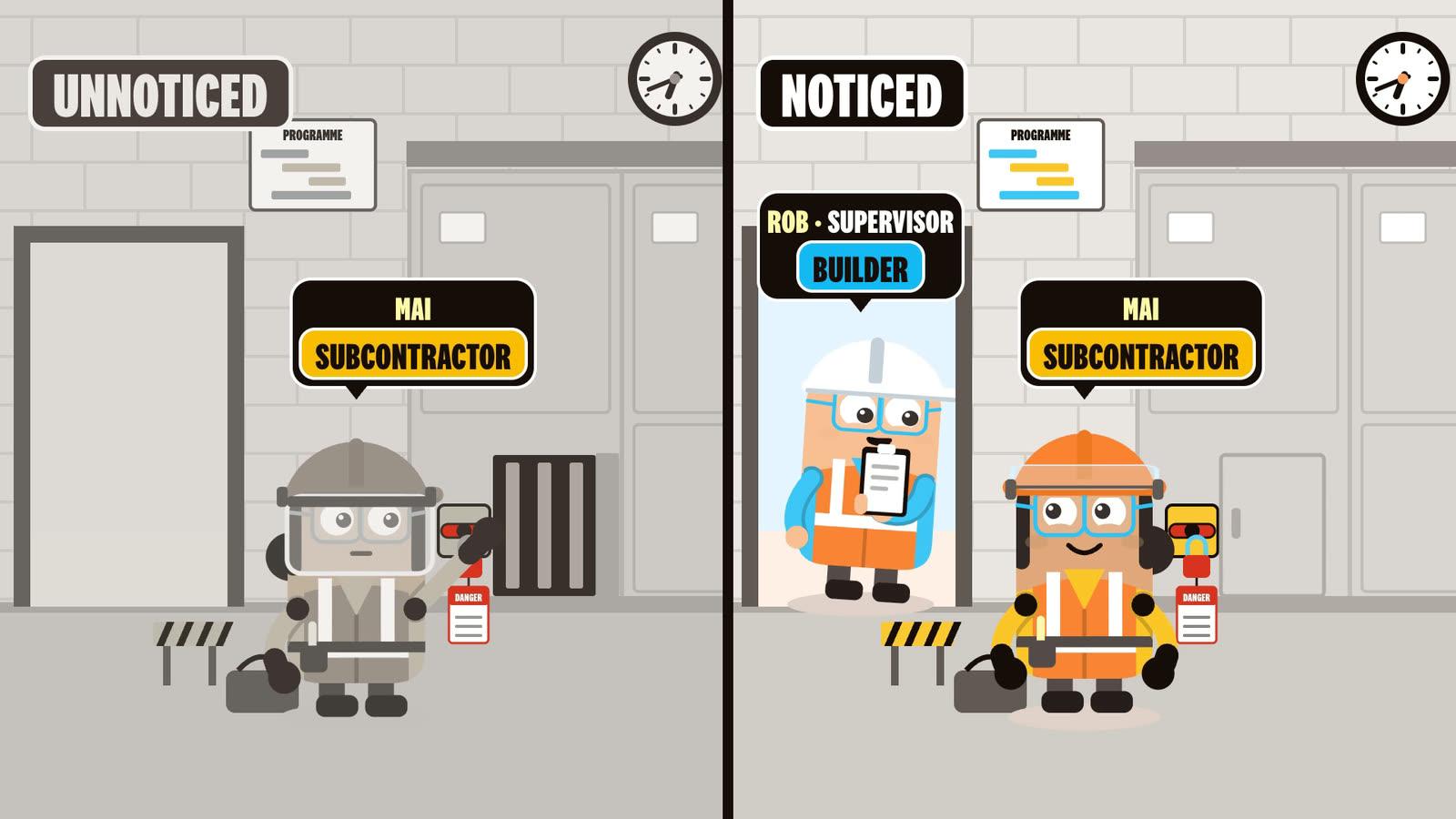
A build at dawn, then a live hall at 2 am. 86 seconds. The site and the people are made up, and the phone screens are drawn for the film.
Read the transcript
Count the people on a data centre build.
Now count the ones who work for you.
Mai is an electrician. She works for a subcontractor, who works for the builder, who works for you.
Your isolation control only works if she uses it.
Watch her shift, twice. She locks the board off and tests for dead.
The first time, nobody sees it.
The second time, the builder's supervisor does.
A few taps on his phone. The reason is one of your own controls.
Mai scratches a small cash reward, on the spot.
Three weeks on, the job is running late.
One Mai skips the test. The other tests, and her apprentice is watching.
A year on, it's two a.m. in the data hall.
Arjun is a vendor technician. Mid-procedure, a label doesn't match. He stops and calls it in.
Staff not following procedures is the top cause of major human-error outages.
His shift lead recognises him before the shift ends.
And it's all on the record.
We won't promise you fewer injuries.
Agree three measures with us, and try it for ten weeks at one site.
Scratchie. Your standard, in their hands.
A control is only real when someone uses it
You write the critical control. The person who has to use it often works for a subcontractor, who works for the builder, who works for you. Contracts, inductions and audits reach that person on paper. Recognition reaches them on the shift.
How it works on site
- 1
See it.
A supervisor sees someone use one of your controls: a test for dead, a permit checked, a job stopped because a label didn’t match.
- 2
Recognise it.
A few taps on the supervisor’s phone: the person, the reason, send. The reasons are named after your own critical controls, and anyone who joined the site with its code or QR can be recognised, whoever employs them.
- 3
It’s on the record.
The worker scratches points, or a small cash reward from a wallet you fund. Each recognition records who, for which control, on which site and on which day.
Try it at one site for 10 weeks
An operating data centre or a build. Three measures, agreed before day one.
Supervisors use it.
At least 70% of supervisors recognising someone each week, after week 4.
It reaches the contractors.
At least half of recognitions reach contractor and vendor workers.
Reporting goes up.
More hazard and near-miss reports than your own baseline.
How it runs
Before week 1, you pick five to eight behaviours from your own critical controls, name the supervisors and take a baseline of hazard and near-miss reports. In week 1, we train your supervisors on site. At week 10, we sit down with you and go through the three measures, and you decide what happens next. Send us your security questionnaire before you start.
We don’t promise fewer injuries.
On a well-run site, injury numbers are too low for a short trial to show a change either way. And we have run on a data centre build, but not yet in an operating hall. That is why we suggest a trial, with measures you agree before it starts.
Scratchie is made in Australia. Security program built on ISO/IEC 27001.
What regulators say about rewards
Rewards for injury-free periods can stop people reporting injuries. The guidance points the other way: reward the act, soon after it happens. Nothing in Scratchie is tied to injury numbers.
A reward “should be applied as close as possible to the act which it relates to”.
Lists “inadequate recognition and reward” as a hazard, and says to “provide recognition or feedback promptly and ensure it is specific, practical, fair and clearly relates to workers’ performance”.
Rewarding people for reporting near misses or hazards “is always permissible”.

What we can show you
Hutchinson Builders, M_Park Building B, Macquarie Park
A data centre build. Hutchinson ran Scratchie there from March 2022 until the project neared completion in mid 2023. Subcontractors were included from the start, and 164 people joined the site in the app.
University of Newcastle research
A one-month reward and recognition programme at a tier one construction contractor in NSW. Researchers compared survey answers from 189 people who had been through it with 129 who had not. With the programme, reward motivation was more strongly linked to safety behaviour (correlation 0.44 against 0.35), safety climate (0.50 against 0.29) and safety compliance (0.39 against 0.35).
The authors conclude that reward and recognition “can be effective as a management tool”, and that incentives should be lined up with safety controls and hazard reporting. They note these are self-reported answers and correlations, to be interpreted with caution.
Scratchie was the technology partner in this research: it was our app the university tested.
Source: Newaz, Ershadi, Jefferies, Gajendran, Ginigaddara and Rahman (2026), Evaluating the impact of extrinsic safety motivation in construction projects, CIB Conferences 2(1), Article 20.
Our own worker surveys, John Holland Waterloo
Safety attitude scores rose 24.7%. 92% of workers surveyed preferred a Scratchie site, and 82.9% said they were more likely to report near misses.
Source: Scratchie’s own worker survey on the project.
Buildcorp, Angel Place, Sydney
Senior Project Manager Steve Taunton wrote that the project had zero serious safety breaches after Scratchie started.
Source: Letter from Buildcorp’s Senior Project Manager on the Angel Place project.
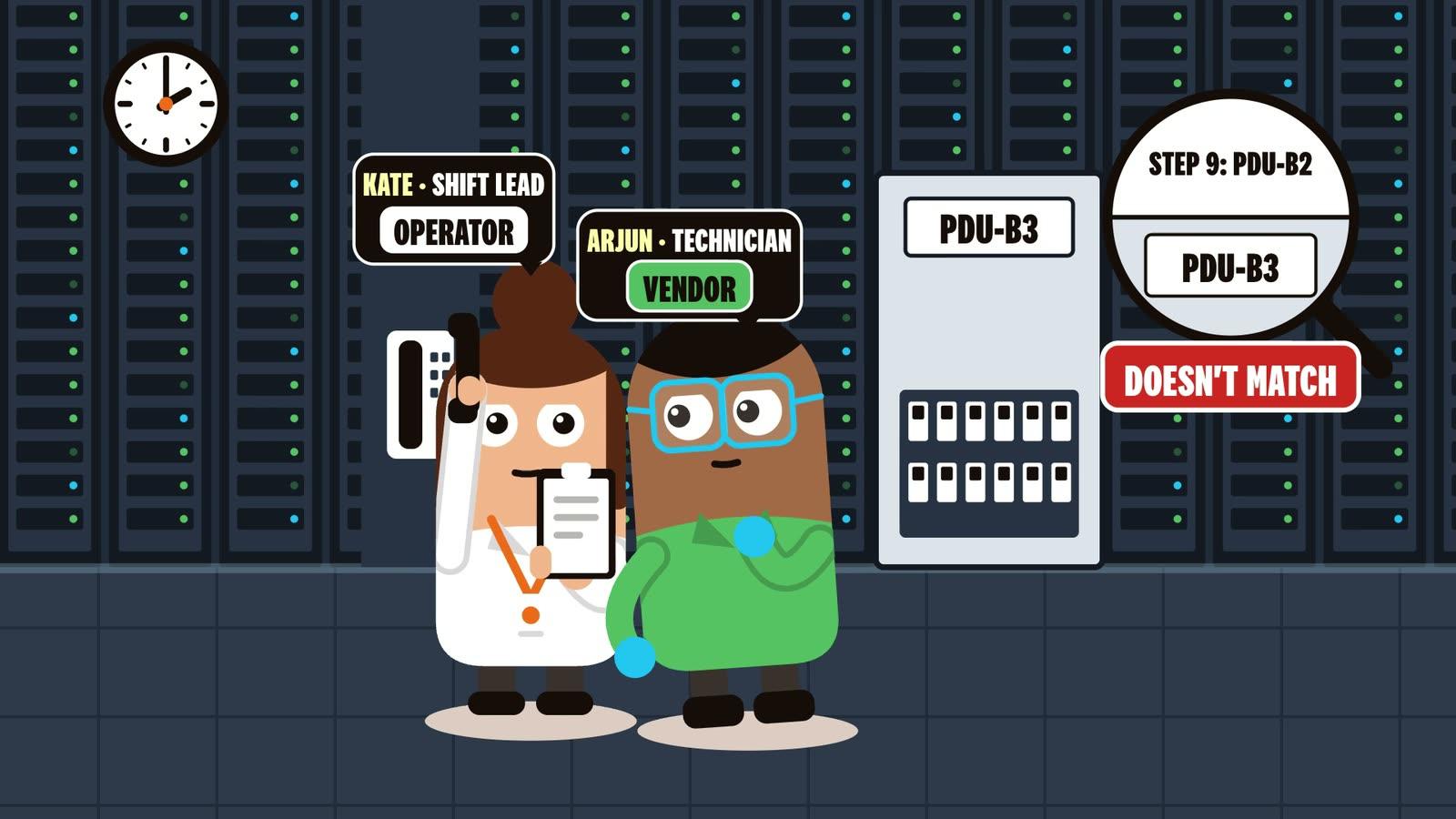
In the halls, the same habit keeps the site up
Staff not following procedures was the most common cause of major outages caused by human error. 59% of the 199 people who answered named it.
Source: Uptime Institute, Annual outage analysis 2026 (Data Center Resiliency Survey 2026, n=199, up to three causes each).
What a shift lead can recognise:
- Stopped and asked when something didn’t match
- Followed the procedure, step by step
- Checked the permit before starting
- Reported a hazard or a near miss
Questions
Questions a safety lead asks
A thank-you app doesn’t control an arc flash.
Aren’t we paying people to do their job?
Who funds the rewards?
Phones aren’t allowed in our halls.
Does it connect to Procore, HammerTech or Teams?
How do you look after our data?
Does it work outside Australia?
Try it at one of your sites
Talk to us and we’ll set up your 10-week trial with you.